Wednesday, March 14, 2018

A little research on Indian Agents...


Just a Little History in Indian Agents

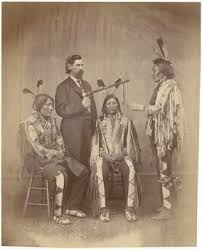
As you may know, I have a western historical romance series; The McCades of Cheyenne that I began researching the idea some time in 2012. The first story Sawyer’s Rose was published in March of 2016-Will a sheriff set on revenge fall for a mail-order-bride with secrets of her own.  The second story, Wyatt’s Bounty was released in April 2017-Will a bounty hunter risk it all to save the lady doctor who walked away.  While these little twists of words make the stories seem interesting, I think there are times I fall short on pleasing those who only want romance while at the same time, western readers think it is too much. I like to say my stories are really family saga with romance and suspense. The third story in this series I am working on now. Dawson’s Haven won’t disappoint, but I had wanted Dawson to be an Indian Agent but as I began the research on the topic, I found that these “Agents” were not always thought too well throughout history. This was a tough one to swallow as we authors want to put our hero in a good light and after doing a good bit of reading on the topic, I decided to change up what capacity that Dawson works in order to assist the Indians. I now have him as hired as an interpreter, but he doesn’t like it when he is referred to as an Indian Agent.  Gonna see if that will work for me, but I thought of all the research and planning I had done to no avail so I’ll present that to you here and let you decide.

In 1789, it was Secretary of War, Henry Knox who first delegated the idea to assign peace agents for working with Indian Tribes. These government assigned employees would act as a buffer in acclimating peaceful relationships between the tribes as well as the relationships between the Indians and government. Most often the agents would reside with the various tribes and were assigned the task of teaching the Indians trade and commerce, along with farming and “White man” religions. Tasks varied according to location but most often the “Agent” was responsible for supervising the Indians in commercial opportunities involving the trade of their goods. By the nineteenth century the Indian Agent was a well coined term for the men who worked to push Indians into dependence on manufactured goods which started during the Thomas Jefferson Administration. While the Indians were forced to purchase commercial goods they could only trade the raw materials such as hides and furs for their part of the deal. Agents at the time were responsible for reporting any illegal violations in what was traded and purchased and reports were sent to leaders on high.

One of the first official tasks of the Indian Agent was to disperse government monies to the chiefs of various tribes who would then render the distributions to the tribe as needed. As would be expected this process slowly turned into one that would open the door for corrupt practices where dishonest Agents and Chiefs were concerned. Allocated monies often didn’t make it where intended. Not all Agents were corrupt but as time went by, many still mismanaged the funds in other ways and poor record keeping added to that process. For the most part Indian Agents had little education and no formal training of correct policy and procedure, not that there were defined practices in the earlier years of the job. Over time the credibility of the Indian Agent declined as rumors of dishonest practices surfaced time and again. It was thought that with the failure of the fur trade, some of the traders opted into the service of Indian Agent at an opportune time. At the same time, however there were Indian Agents who did a good job in their duties and were successful in assisting tribes to acclimate into “civilized” peaceful camps.  

By the Civil War in the 1860’s periodic outbursts of public concern had pushed for more humane treatment of the Indians. President Ulysses S. Grant’s administration was the first to allow for Christian denominations to take control of various tribes but that lasted only a short time with the religious establishments ultimately pulling out of the practice of “civilizing” the tribes. In the 1880’s, Indian Agents, though no longer thought of in that term, spent time educating the tribes in industry and agriculture, with alcohol use strictly prohibited. Most agents of the time were assigned for political reasons rather than their education and knowledge and this lead to the failure of the system for the most part.

In 1896, President Grover Cleveland decreed that those seeking positions such as Indian Agents, Teachers, Doctors, Nurses, etc with the tribes would be certified in their various fields in order to be assigned. This over time improved the quality of those assisting with the tribes, but it did little for promoting Indians themselves to better lines of work.

Early on, and prior to this last bit of progress Indian Agents were assigned and responsible for the following:

Preventing conflict between the Indians and settlers

Watch out for Commerce and Trade Violations

Assist in keeping peaceful negotiations between the tribes and soldiers/military

See that annuities were properly dispersed to the tribes

See successful removal of tribes from lands assigned to settlers

See that Indians weren’t idle and labored accordingly

Teach the Indians to farm and grow crops

Indian Children were to wear “Civilized” Clothing and Learn English in “Indian Schools”

Children were also included in being taught the industrial trainings of the adults

Agents were assigned to keep a Census of the tribe and to give English Names to the Indians


So as you can see, there were some good things that came out of acclimating the Indians to what I will refer to as the “New America”, especially when the agent was a good one but it seems those were few and far between. But as not to bash all the Agents in history, there are a good number of them that I wouldn’t mind reading about some time and I may very well do some for future writes here. I do think we all know that history wasn’t very kind to the Native American tribes. But I am also a fan of not erasing history as it happened, so that we can all learn from it.


Saturday, March 10, 2018

Just a hint of what's to come for Dawson's Haven...


Just a hint of what is to come, as it seems a lot of readers are waiting. Just know that it takes a bit to get the story just how it needs to be for the character and the readers, but I hope this lets you know Dawson's Haven will be worth the wait!


Excerpt Dawson's Haven---The first kiss

                He took the bag from her and drew the straps apart and tilted it. A small light blue polished stone rolled into his hand and he held it out to her. She lifted it into her palm as he leaned ever closer, having never shared anything from the small leather bag with anyone before.

                “Turquoise. Polished it myself. For wisdom and protection. It’s…” Her cheek brushed against him once more and he stopped without finishing, wanting the kiss he hadn’t taken.

                Her breath was on his skin but as he leaned closer she pulled away, bounding to her feet and taking off on a run, turning back with a giggle, enticing him to follow. “Catch me and I will return your precious stone.”

                He chuckled. What was it with this woman, so carefree? He scrambled to his feet, giving chase, catching up to her in a few strides. He caught her around the middle and they fell into the high grass, his body across hers. Her laughter echoed through him as he studied her face and lips and settled his gaze on her wide hazel eyes.

                “Kiss me, Dawson McCade.” Her whisper filled his ears as she caught her breath.

                He wanted the kiss and he’d have it too. He placed his hand on her cheek, brushing the bruise that had faded, her skin flawless save a sprinkle of tiny freckles. He pressed his thumb across her lips and her gaze never left him as he touched her, though she wore a pleasant shade of pink. Her lips were plump and moist and—

                The impact of his mouth against hers made his heart race and his groin tighten. She was tender and parted her lips with little coaxing. Touching his tongue to hers, he wanted to consume all of her. Her warm mouth tasted of mint and her sigh of passion or surprise made him moan with the hard want of her. He rested his hand across her belly and slowly slid it to rest underneath her breast.

                She pulled from the kiss breathless, her breasts pushing against his chest and he continued his fervent kisses along her cheeks and across her jaw and to her neck. He raised his head, finding her gaze once more. It surprised him when she lifted her hand and tucked his hair behind his ear making him shiver. The sensation of her touch went clean through to his heart, warming his chest. He’d never wanted a woman as much, but more than that he wanted to know her mind and her thoughts. All of her…

                “My heart’s beating so fast.” She placed a hand to his chest. “I’ve thought of you so often.”

                He had no words, but touched her cheek again as Josie came close enough to drag her reins across them.

                She giggled and grabbed the reins. “Oh, Josie.”  

                “When you were at my cabin, I wanted this, to touch you, kiss you…” And he was falling ever deeper in admitting anything within his heart, knowing full better that she was too young and he had no lifestyle conducive to having a woman in it.

                “Then kiss me again, Dawson.” She ran her hands into his hair drawing him back to her lips.

                In spite of his thoughts, he lowered his mouth to hers, this time kissing her without mercy, tasting and letting his hands roam her body. Hell, he’d like to undress her here and now, taste the pert peeks of her breasts and then, take her as a man, not yielding until her legs quivered and she bowed beneath him in her first pleasure. And then he wanted to simply hold her and lie with her forever in a peaceful state of bliss and warmth he hadn’t known for a long time.

                He sat up abruptly, leaving her in the grass. Hell, he had to stop now or he’d do exactly what he was thinking. That was the problem, he wasn’t thinking was he?

                She sat up and opened her palm breathless. “Your stone.”

                He struggled to inhale enough air to recover and glanced at her, dragging a hand through his hair. He placed his hand under hers and closed her fist around the stone. “It’s yours now.”

                “Oh, no, I couldn’t. I mean it’s sacred.” She shook her head.

                “It is yours.” Some part of him he wanted her to have it, to keep something of him forever safe in her grasp.

                She leaned against his shoulder studying the stone. “What just happened between us?”

                How was he to answer a question like that? Hell, he was more unnerved by what hadn’t happened and the tightness of his buckskin trousers had relented little. He sucked in a much needed deep breath and glanced across the meadow having not felt what he was feeling ever before. “What would you want it to be?”

                The pink blush across her face hadn’t abated. “The beginning of something very beautiful.”

                He gave a slight chuckle and shook his head. “If you knew my thoughts, you’d run faster than you did from those Dog Soldiers.”

                She took his hand again. “I have no fear of you, Dawson McCade.”

                He smiled and stood, dragging her up beside him. “You should.”

Friday, February 9, 2018

The Journey West by Wagon Train


The Journey West by Wagon Train 
Just a bit of History
In 1803 the United States expanded West with the Louisiana Purchase. Later with the assumption of lands gained with the Texan Annexation (1845) and the Mexican Cessation (1848) the opportunity for a new life for many was opened. With the claim of the Oregon Country (1847) hundreds of families ventured West by wagon train to the fertile lands of the Oregon Territory. Government pushes to settle American Pioneers on the newly claimed lands found hundreds of men, women and children leaving Independence Missouri for the chance at a new start. Reports of lands rich in soil and a farmer’s paradise resulted in the first wagon trains arrival to Oregon in 1843, before these lands were actually acquired.
The Push for Westward Expansion
The push to stretch America from the East to the West coast didn’t always warn of the hardships of such a journey. Preparing for the trip most often required selling land and leaving life’s luxuries behind. Selling one’s farm was a gamble but most of those willing to make the journey often banked on the produce of the land they planned to farm. Many sold their land and homes at a loss to set out on a journey that would was for many the biggest hardship of their lives. Many heading West with the first wave were promised 640 acres of prime farmland but the government Donation of Land Act cut the number of promised acres in half only a few years later. A man could claim 320 acres for himself and the same amount could be claimed by his wife in her own name. Women interested in the ownership of land were often enticed West for the same reason this number would later decrease to 160 acres for a man and the same for his wife, however around 1869 The Homestead Act in Oregon changed things for women. Even before they had the right to vote, women over twenty-one who were the head of the household were able to receive homestead patents for gaining their own land. Most often these women were widows, those with disabled husbands, and many of them single women.
Preparing for the Journey
The purchase of tickets by train to Independence Missouri in its own right could be expensive and the costs of a sturdy wagon, a team of oxen or horses and supplies didn’t come cheap. Those seeking to make their own fortunes off the families arriving to Independence sold some of the finest wagons and provision. The costs for even a small family’s provisions for the trip could easily run in excess of $1200.00, a great deal of money at the time. The journey of 2000 miles and more than 5 or 6 months didn’t come cheap though many families saved for years and then sold all they owned in hopes of making the payoff with hard work and successful crops once in the Oregon Territory.
Some wagon trains were composed of over 200 wagons though most were as small as 30. One of the most used types of wagons was called the Conestoga which was referred to as the camel of the West. These were less robust but stable in comparison to others. Less could be packed so bare essentials were planned for and the rest left behind. A cumbersome wagon loaded too heavily with unneeded provisions was the reason the trails west were often littered with furniture and items from homes that had been left behind. Preparations for such a journey meant a man often hired another to help on the trial, paying in full for the helps journey in exchange for “Man’s work”. Such a trip could be brutal though women often helped by working hard right alongside their husbands. Preparing for a trip of months across terrain from mountains to deserts in weather conditions that were at best unpredictable was at best dangerous for all involved but not fully limited to the list below:
Supply List
Tools-Hammers, nails,
Barrels of food staples
Rope and lot’s of it
Cast Iron pots, skillets, eating utensils and plates
Weapons for hunting and protections-shotguns, rifles, pistols, knives, bullets, molds and lead
Medications and bandages
The Family Bible
Bolts of cloth and linen and sewing kits
Plant cuttings for growing on the new land along with seeds and garden tools
100 pounds of Flour
70 pounds of bacon
30 pounds of hardtack, beans rice, coffee, sugar, dried fruits, baking soda, vinegar
Eggs and good China were packed in barrels of corn meal to keep them from breaking
Blankets, pillows, tents, poles and stakes
Canvas and Hickory Bows for the wagon itself
Lanterns and fuel
Pens papers books
Pipes and tobacco
Scopes, coins and money
Shaving items soaps and perfumes
Extra clothing, shoes, boots and socks
Saddles and leather for repairs
Livestock and feed

Dangers Along the way
A family headed out on a wagon train could at best plan for less than a hazard free journey. A lot of planning was needed to choose the right time of year for making the journey west. If a wagon train left too early there was the chance that grasses would not be available along the way for the livestock making the journey. Nothing to feed livestock on a 2000 mile journey could devastate a train and leave the travelers stranded. Leaving too late in the year meant the chance of trying to cross the mountains in inclement weather where at times the snow and ice were impassible and incredibly dangerous. Exposure ended many a travelers’ journey when not prepared or choosing a wrong course. Broken wagon wheels and sick oxen often ended many trips west. River crossings could often end up in the loss of lives if waters were higher than predicted and or wagons washed away with family members inside. There were ferries to charter wagons across but the costs could sometimes be high.
While rare, Indians attacks did occur, however, many tribes welcomed wagon trains as they were interested in trading. At times horses or other items were stolen by the Indians which often ended in bloodshed for both sides. Over the years the relationship between the wagon trains and Indians slowly deteriorated and by the 1890s with the Indian’s having lost their way of life, tensions continued. But it seemed the Indian tribes had more interest in fighting each other than in the immigrants traveling west by Wagon train when it came down to it. There were also the occasional wild animals to deal with which included, wolves, coyotes, bears, snakes and even buffalo that became dangerous during a stampede.
Numbers of men, women and children succumbed to disease and illness while on the journey West. Cholera being one taking numbers of lives due to unclean conditions and water. Lack of physicians and access to needed medical care was often left to others in the train that had no experience. There were doctors who made the journey, but lack of clean water and well prepared foods added to the demise of hundreds. Those at most risk were the elderly and the very young as well as pregnant women who only had the help of other women or perhaps a single midwives who had no resources along the trail. Alkaline water was also an easy way to find the oxen sick or dead by morning. It was imperative to find good water sources.
One of the little thought of dangers was crossing paths with a family who had decided to return home, those who had not found what they thought that would in the new part of the country. The tales of lost wagon parties such as the Donner Party (A wagon train that took a less popular route and found it closed off due to inclement weather and thus were stranded for months, those that survived resorting to cannibalism in an effort to survive) could be responsible for a family turning back for Independence.
The Daily Routine
The first part of the journey West on a trail was usually easy with flat terrain giving those new to the trail the chance to establish routines with required daily chores. It was often on the first part of the journey where those not use to the trail or caring for animals were forced to learn how to handle a team of oxen or horses. Hitching animals to a wagon wasn’t easy and the maintenance for the needed hardware was almost never ending. The animals needed access to food and water along any trail and often time trains rode along water’s edge to make sure the animals had what they needed to survive. The maintenance of the wagon itself could tax the men working the train and the first part of any leg of the journey was a time to establish the daily rules and responsibilities of being on a train. Children often held their own responsibilities such as milking or carrying water from streams and rivers. Children would gather berries and other food staples that were easy to find on the train. Some of the Wagon Trains held a few hours each evening for school for the children. Children might also use slates to practice sums while riding in the wagon along the way.
An average day on the wagon train would look something like this:
4:00am
Wagon Master fires shots to wake the camp of circled wagons which served as a nightly barricade from Indians or other attack. Fires were started. Oxen were herded to the wagons and yoked for the days’ journey.
5:00-7:00am
Breakfast. Yoking teams. Tents folded and stored. Wagons loaded
7:00am
Wagons pulled out for the days’ journey. Women and children often walked along with the wagons. Men and boys on horseback rode the lines in protection and to make sure wagons kept up and herded animals along.
12:00pm
Lunch break Wagons stopped. Oxen were turned loose with yokes on to feed. Leaders often huddled to deal with any issues that had arisen since the day before.
1:00pm
The wagon train pulls out again and continued until a spot of the nightly parking was found most often before darkness set in.
Evenings after sundown
Children often played as women prepared the evening meal. Adults gathered to talk in groups. There might also be dancing and singing after the evening meal.
Nightfall
The men took varying shifts of standing guard each night and until the gunshots of morning woke the train. And then the wagon train would start all over again for the next 5 to 6 months it would take to arrive along the to Oregon territory


Food Preparation
Dried Buffalo dung was often collected as it burned easily to start a camp fire for meals. This readily available resource burned quickly with little smoke. Gun powder was often used to get a flame started on a fire. Iron skillets were most often used for cooking all the needed meals, that and the open flame for roasting meats. Most carried flour and baking soda and dough could be created for breads, biscuits and pancakes or johnnycakes. Meal often consisted of dried meats, bacon and even dried beans, all of which were easy to store and carry for the journey. Frying meat often meant it was easy to add a little flour to create rues with the drippings and hearty gravy could be made to cover the dryer breads and beans. Water could often be polluted so coffee was the drink of choice even for children. Boiling the water kept sickness down and coffee could cover the smell of old water. The prairies were rich in game. Small birds and game were readily available. Rabbits, Prairie chickens, pheasants, antelope and big horn sheep as well as buffalo. Buffalo unless stampeding were an easy target given their size and lack of running when in danger. The buffalo would later suffer drastic losses in numbers simply for their hides, but in the early Wagon Train years one buffalo could feed the whole train and little was wasted.
On arrival to their destination, exhausted families relished in actually finding a bit of civilization again. With small towns waiting, needed provisions could be restored. Once this was done, families were often on their way to the land they had to claim and then it was time to plan and build a home before the winter came. Home in the area would be made of wood and or a combination of sod, bark and even animal skins until finer homes could be established. Often families had to help each other survive the first years until crops could be planted, harvested and sold at market. Families who survived the hard journey intact often found starting from nothing difficult, but many of those that endured thrived when given time.
 It seems the short time of the 1800’s and early 1900’s summarizes the expansion West for those who made the journey on wagon trains, but the arrival of the transcontinental railroads would go on to end the vast numbers arriving by wagon. But those who made those long hard journeys by wagon are the ones responsible for developing a lot of the cities that still exist today. 


Tuesday, February 6, 2018

Ask a Narrator...Welcome Dawson McBride!


Meet the Awesome Dawson McBride-Book narrator extraordinaire…


I am so very pleased to introduce Mr. Dawson McBride! Dawson narrated Sawyer’s Rose and Wyatt’s Bounty and I couldn’t be more pleased with his melodic deep voice and his ability to make my cowboys come to life, all with unique voices. I did a poll to find out what kind of questions people have for narrators so that maybe Dawson can enlighten us all on just how the process happens. Welcome Dawson, and tell us about you and how you got into narrating books? How long have you been narrating? Do you have a website for people to find your books?


Kim, I’ve been narrating for about 4 years. I’ve been telling stories since about the age of 6 when my father caught me breaking into our home because I had, once again, lost my key.

I’ve always been drawn to narration and the art of telling a story.  My first memory of a great storyteller is Rex Allen narrating “Charlie the Lonesome Cougar”. Like many voice actors, I began doing research into voice acting when I recognized that people made comments on my voice and how they enjoyed listening to it – and getting paid for that, was something that I thought would be a really great idea.

Once you begin researching the art of audiobook narration, you discover that it’s much more than simply “reading out loud”.  It is, in every aspect, the art of acting. So, after a few classes and some coaching I began searching for work.

I have been fortunate enough to complete over 75 books at this moment in time. Dawson McBride, however, has just begun his career in romance narration. Thus far, Dawson has completed 4 books, of which 3 are available through Audible and one is pending release.  I am also currently in production on 5 others, all in various stages of the production process.  All of my books as Dawson McBride may be found on Audible simply by searching my name – Dawson McBride.


What makes you choose a story and how do you know it is a fit for you?

First is the issue of my voice.  It doesn’t and won’t fit any and every genre. I began with mostly traditional western historical titles or those titles mostly set in the post Civil War 1800”s. I have been asked, and I have completed, some mystery thriller and some horror titles. Mostly I’ve been chosen by authors and publisher due to either the depth of my voice or the natural southern accent that my parent’s worked so hard to provide for me.

What made you choose to narrate romance stories? What other genres do you narrate?

This is a very good question.  I’ve been asked for over two years to begin producing romance titles.  But I was a bit skeptical, not because of the level of spice or the issues one may typically associate with shying away from romance.  My concerns were for being able to properly and effectively perform the spicy parts so that I didn’t sound like a giggling 9 year old looking at his first Playboy Magazine. (yes, and I wasn’t looking at the articles).  After being encouraged by more than one of my female peer narrators I decided that a rebranding effort would be necessary so that my romance work could stand apart from my other, non-romance work.

The level of spice is not an issue for me. What is an issue for me, and it is the line I draw for myself is when and if sexual activity within the title is non-consensual – unless it is a part of outlining the characters past or for creating a picture of why the character is who they are.

Some may assume that pseudonyms are used to “hide”, but for me, it’s a branding effort.  Much like the large auto manufacturers, it’s the same company, but a different brand.  I explain Dawson McBride is the Lincoln Continental and my other name is the Ford F-150.

My other guy narrates historical fiction, contemporary fiction, mystery / thrillers, and some horror / fantasy. Dawson will always narrate romance, and the sub-genres he is most suited for are Historical Romance with a Western or Southern flavor, MC Romance, and Military Romance.

When you are narrating a story is it done in order?

If by, in order, you mean from Chapter 1 to the Epilogue, yes that’s exactly how it’s done.

Is there a certain time of day that works better for you?

I’m an early bird, and in an effort to better balance my work life with my family life I choose to work fairly early in the morning (as I answer these questions it’s 4:15 am on a Saturday morning – and I’ve already made corrections to three chapter for an author and posted them for her review, auditioned for two commercials, and responded to a handful of email messages from publishers and clients)

Once the family is off to work and school, I’m back in the booth where I try to limit my narration to 3 finished hours per day (more than this causes me voice to weaken) and then I work on Social Media, Marketing and other business related issues associated with voice acting.

How many takes happen to complete a story, or what is the timeline on completing a work?

I narrate and edit each chapter, one chapter at a time.  I then listen to it for quality issues comparing it to the manuscript I’ve been provided. Once I’m satisfied, for ACX I post it to the production site where the Rights Holder has access to it and can choose to listen or not. If they listen and find errors I may have missed, I make those corrections and then post the corrected chapter for review.  I don’t like to move forward until I’m sure my author or Right’s Holder is completely satisfied with how their story is being told. I work on more than one title at a time so depending on the length of the title it could take anywhere from 4 days to 2-3 weeks to complete production.


How many times do you read a story before beginning the narrations?

I read every manuscript through once. Making notes while reading on characters, their mannerisms and attitudes and how they should be played. I keep those notes with me while narrating and I record a snippet of each voice to keep in a file so if that character appears in Chapter 1, but disappears until Chapter 43, I can go back and listen to how he or she was portrayed in order to be consistent.

And yes, you must read the entire story first!

What kind of equipment do you use and what is the set-up like?

I use an IMac within my home built booth, and I have an audio interface that connects my microphone to my IMac. I use mostly free software for recording, again, in a booth I built at the end of a long walk-in closet in my home.

What are you favorite works to narrate?

I love great stories and I love happy endings – where the protagonists finally come together and the antagonists get what they so richly deserve. A twist or two in the plot are always fun, as well.

What is the best thing about being a narrator?

The best thing is working from home where I get to be accessible to my family when needed and I can be flexible with my work schedule.

What is the worst thing about being a narrator?

This one changes for me as my career has progressed – First it was about finding work.  Then it became finding profitable work. And I have always had a dislike for marketing and sales, but it’s what we need to do if we want to take care of business. So, I imagine the worst thing is the necessity to have to always be looking for more work – because you never know when a great run of work is going to suddenly dry up.

Do you have trouble deciding voices for characters?

Not really. I try to not make my production about me and my ability to do character voices.  If that was my focus I’d probably be pursuing a career in animation or video games….the “performance” can never take away from the author’s words – it must be about the author’s words because I’m simply the one telling the story. My work needs to be a compliment to the author’s work, not a distraction.

And a sidebar, what do you like to read? Any other hobbies?

I grew up on Zane Grey and Louis L’Amour – and dad always took me to the most recent John Wayne or Clint Eastwood movie, so that’s where I gravitate to.  I do like to read autobiographical works of people who have had an impact on history – and not always a positive impact.

What advice do you have for authors working with a narrator?

Be honest about the work. Don’t surprise them. If there is a character with an Irish accent in book three that appears in book one, make sure they know that they have an Irish accent – or book three is going to be a surprise to your listener.

If you can afford it, always choose per finished hour (PFH) work. You’ll get the quality production you want and need and then you will reap all of the benefits of the royalties without having to share. You’ll always have a higher caliber of narrator pool to choose from when you can afford to pay between $250 - $400 per finished hour, or more. Many narrators who accept Royalty Share (RS) work do so with the understanding that PFH work comes before RS work. Many of these same narrators may not be agreeable to do the additional titles in your series if the sale of the first title in the series is not allowing them to make the same living they could under a PFH arrangement.

Also, if you’re not able to afford the full PFH method, consider a “Hybrid” arrangement. Assisting the narrator with the cost of his or her editing, proofing, and mastering at around $100 PFH plus the added benefit of Royalty Share will often allow you access to that “better narrator” pool.

Be as responsive as you’re able to be. If your narrator communicates with you, respond. They have deadlines and are likely handling more than one client at a time so they need to always be moving forward. If you are too busy to respond in a timely manner then that backs the process up and you may get lost between the cracks. If you know you’ll be too busy to timely respond, then let your narrator know upfront that it may take some time for you to get back to them. Most full time narrators started out as part time narrators so they understand the need to balance what they WANT to be doing with that “survival” job that pays the bills and keeps the lights on. Always be as professional as you expect your narrator to be. They will respond in kind. I promise!

Market, Market, Market especially Royalty Share titles. Narrators and their voices do not move the sales needle for titles. We are happy to assist, but most listeners don’t follow titles for the narrator, they follow the titles of the author. The more effective your marketing plan and the more involved you can be within your social media network, the more successful your titles will sell.

What advice do you have for those aspiring to become narrators?

Here’s the best advice I’ve ever heard for someone wanting to know if they’d like to be a narrator and it comes from the most prolific non-ficition narrator on the planet, Sean Pratt.

YouTube link and follow his advice:  https://www.youtube.com/watch?v=NPzPi-_0Xi8

….and that’s the most honest advice I can provide to anyone who is considering narration.

Thanks for being here Dawson! If there are other questions for Mr. Dawson McBride add a comment. I will be holding a raffle for those that comment. The winners will receive a free code to one of my Audible Stories.

Wednesday, January 24, 2018

A contract for All But the Fall...My First Contemporary Series...


And another contract....here's the scoop


In 2013 after completing three western romance stories (ones that I still need to rewrite) I had also completed the story I had worked hardest on Sawyer's Rose. For those of you who didn't know, I began writing in 2011 and when I realized my first series would need a full rewrite I started over with a new series Sawyer being first in The McCades of Cheyenne. Anyway after reworking that story several times I thought I would attempt a contemporary series of three brothers to get the old west out of my head for a time so I could later continue in the wild, wild west with a clear mind. So I started and completed a rough draft of a contemporary sometime in 2013 and didn’t ever get back to it as things were beginning to happen. In 2013 and 14 I was pitching Sawyer's Rose and working on the rough draft of Wyatt's Bounty once again back in history which I love. BUT...


Last April of 2017 I was hanging out on a Wild Rose Chat one Tuesday evening, the one about the Yellow Rose contemporary cowboy line. That is the evening my friend and fellow author SherrieLea Morgan threw me under the bus and for that I am now very grateful! How it happened was Rhonda Penders, our editor in chief and CEO at The Wild Rose Press.....the boss....was leading the chat and asked if anyone with a contemporary western romance would post a line or two about their story. So SherrieLea posts, "Kim has a good one." I had forgotten she had read a portion of that story I had set aside.  WHAT? I freaked for a minute and then realized Oh yeah, I do but it is very dusty. So I held out as a few others posted about their story and so finally I got brave enough to post about it with:


“Cowboy horse stuntman falls for a nurse consultant on the set of a old west television series.”


Then the boss tells me "Kim Turner get that story submitted!"   My response. "Yes Ma'am!"


And so...I sat aside Dawson's Haven and picked back up All But the Fall. The story was complete but I had learned so much from 2013 to 2017 that it needed a once over to fix all the things I had been taught in publishing two books. So from May until December I re-edited through this story, my first attempts at something modern. I knew I wanted to have a hero...the kind I like. The protector but at the same time a man with a very tender heart, an outdoorsman but not a typically expected cowboy. This one jumps horses and rides a motorcycle and adores is young daughter along with the heroine...the nurse consultant on the set of the old west television series where he and his horses are employed.  But I won’t give the story away here except to say....she is running from her past and he is running to her....that should peak some interest out there. But this series comes with a few things behind the scenes with topics important to me. While I have only written the first story, there are two brothers that will get their story and I am working on outlining those stories now.


My youngest daughter is Chinese and bright when thinking about things. When she was no more than six, she asked me why there were no Asian guys on the cover of romance novels. You know what? She was right. So in this series I have three brothers who are not biological brothers and they are all adopted, not biological brothers and the social along with cultural issues will arise. And my daughter is excited that one of the heroine's is a Chinese woman who was adopted into a Caucasian American Family. I think it will be fun.


And back to the story All But the Fall...I submitted it in full only a few weeks ago after back in the fall allowing my editor Nicole D'Arienzo to read a bit of it and to my amazement she liked it and evidently others at The Wild Rose Press. I am excited to be offered a contract for this story and will now be published in two genres! As I patiently wait to begin edits on this story I have to thank SherrieLea for the giant push when I wasn't expecting it.

Stay tuned for more on this story but in the meantime go check out books by SherrieLea Morgan!!!

Friday, January 5, 2018


Happy New Year....

So excited to start 2018 off with a bit of a plan to get better organized. I have never been one to boast about resolutions because rarely can I follow through. So over the years I just like to take a deep breath and use my first few weekends to sit down at the table and get my tax junk together as the number one priority for each year. This usually ends up being a month long project over the weekends and while some people last minute this in April, I have rarely done that. What doing my taxes really means is listing it all out so my cool tax guy Art knows what to do with it. 

And my second plan is to follow my calendar planner notes by taking a look each day and focusing on what really has to be done ASAP or what can wait. Do you guys out there use a planner or calendar? I carry mine to work and use it at home too. Having multiple calendars has never worked for me and neither have things like Outlook or my phone calendar. I like and stick to handwriting in pencil so items can be chsnged. If not written down then it gets missed.

And I think it is time for a bit of redo in the house one room at a time. I hope to focus on one room a month, cleaning it from top to bottom? Culling the junk and then maybe repainting some time in the spring or summer. This will be an ongoing project as the girls would like to repaint and decorate their rooms "more like teenagers." 

Another plan for this year is to get organized with groceries. I want to create a master list based on what my family really eats ans only purchase those things based on meal planning. I also need to get back to clipping coupons and shopping sales along with shopping ahead for birthdays and next Christmas. 

And then if I get all these things organized I will have more time to write, which is the real reason for planning to get other things done. As I have mentioned I want to cut back on activities and events related to writing so that I can get back to the writing. I do hope to slip away for a writing weekend or two but I am also going to schedule more writing time this year and if that means shutting and locking the door or hiding...well then...

So anyway for New Years resolutions, not really my thing but I am heading up to make sure I start out with a plan. And you?

Hey and leave a comment here and the first five will win a Wild Rose Calendar from me along with some other book goodies!

Kim

Sunday, December 10, 2017

Giving Thanks and Remembering the Reason for Christmas and Looking to the New Year

Whew! What a year. Busy in all aspects of my life, I am reminded around the holidays to look at what matters most.

Thanksgiving rode through here fast enough to take my breath and threw me right into December where the real whirlwind usually begins. But I am ready... I have a gift list.

I have, however, figured a few things out about where I am most thankful. As always I am thankful for my family and a healthy year and for friends who are always there and for those who are no longer with us. These things may seem simple but I think they count the most. And, as Christmas approaches, and I enjoy Alabama's new Christmas CD, I have been reminding myself and my girls to think about the real reason for all the gifts and celebration...a Savior born for those who seek Him still. I also want my girls to learn a bit about giving back so I think we may bake some holiday treats for a local nursing home or something they decide on.

As media seems to be taking over all our lives in one way or the other, on Dec. 1,  I started limiting myself on media to recharge the batteries and spend time with family and think about the things I am hopeful for in the new year and the goals I have for my writing journey.

This year was busy with three conferences including Romantic Times, Romance Writers of America, and Moonlight & Magnolias with Georgia Romance Writers. All are fantastic events but I think too many for one year and too expensive leading me to a new strategy in the upcoming year. Events are great and author events are great for networking and learning the craft and business. Reader events can connect you with more readers but not so much if you are not well known. So...

I recently posed the question about what marketing strategies really help authors sell books. There were a lot of varied responses and some good ideas but the one that stood out and was mentioned more than once was:

WRITE THE NEXT BOOK! 

And so my strategy for the next few years is to do just that-- get back to the story. It takes a lot to plan for and attend events so I may only choose, from now on, to go to one a year and one that is close to home. When I first started writing and had no events I managed to write so much more and it is time to get back to that for now. And so here it all stands:

Sawyer's Rose has continued to sell each month in eBook and print formats and is now available on Audible for those who would enjoy a listen. 

Sawyer's Rose Audiobook on Audible

Wyatt's Bounty is doing well in eBook and print and I am currently working again with the awesome Dawson McBride on the narration of this story as well. So look for it soon!!

Wyatt's Bounty Audiobook on Audible - Coming Soon!

And I have something a little different coming up. I pulled out a contemporary novel I wrote in 2013 and have spent since May making this story better. This one goes something like this:

What happens when horse stuntman meets nurse consultant on the set of a western television series? Stay tuned!

And I continue getting lots of requests for the third story in the McCades of Cheyenne series. Never fear, I continue to work on Dawson's Haven but in order to give you guys the story you want and the story he deserves, it is going to take a little more time. Trust me though... Dawson is the quiet brother who will have a few surprises. 

I will leave it at that for now and wish you and yours a very Merry Christmas and a Happy New Year. 


P.S. If you have read a good book or do in the future, go and leave a review. It really does matter!!!!

-- Kim